

In the realm of children’s education, the debate between online and offline learning is more pertinent than ever. Abacus classes, known for their cognitive benefits, are no exception. In this comprehensive guide, we delve into the nuances of offline and online abacus classes, weighing their benefits and drawbacks to help parents make informed decisions.

At Mynsha Learning, we believe in harnessing traditional tools like the abacus to enhance modern education. As we continue to evolve in our teaching methods, a key question that many parents face is whether to choose offline or online abacus classes for their children. This guide explores these options to help you make the best educational choice for your child’s mathematical development.
Understanding Abacus Education
Historically, the abacus was developed in multiple cultures as an aid for calculations. Its relevance in the modern educational system is profound, especially for young learners. Studies have shown that abacus training can enhance memory, concentration, and the ability to perform mental calculations. For children, these skills translate into a broader educational foundation, impacting their academic performance across subjects. The abacus is more than just an ancient calculation tool; it’s a bridge to enhanced cognitive capabilities. Engaging with an abacus helps children develop numeracy, memory, and concentration skills. Moreover, abacus learning strongly supports the development of the right brain, promoting creativity and problem-solving skills.
Offline Abacus Classes
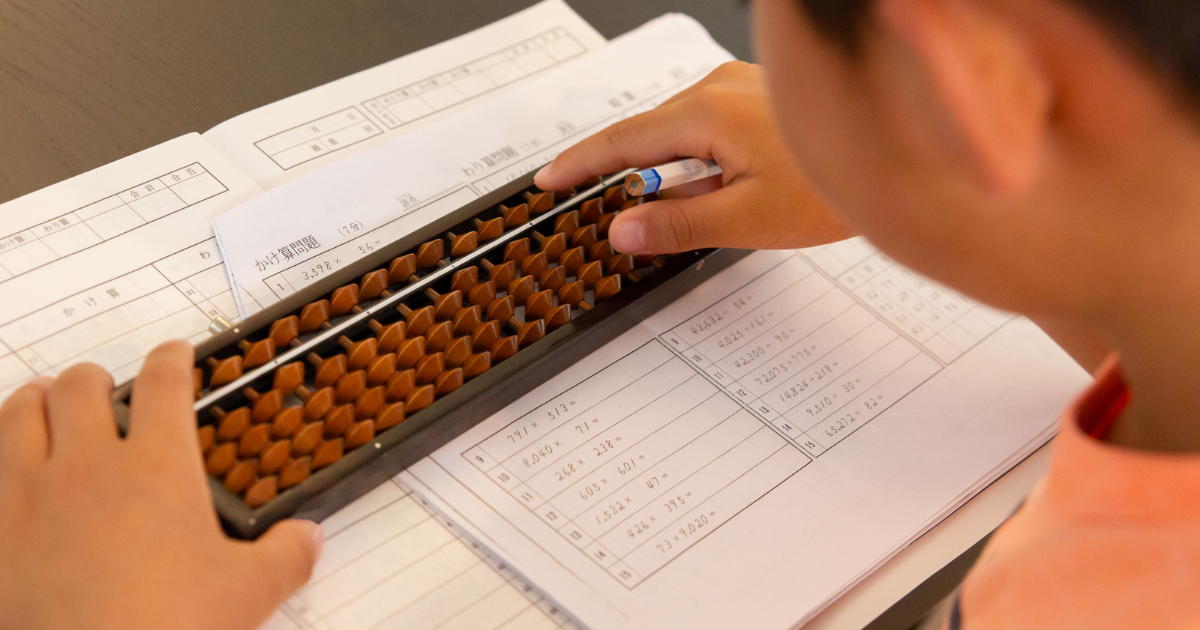
Traditionally, offline abacus classes have been the go-to choice for parents seeking to enrich their child’s mathematical abilities. Conducted in physical classrooms under the guidance of experienced instructors, these classes offer a hands-on learning experience that is rooted in tactile engagement and personalized instruction.

Offline classes boast several advantages, including the provision of personalized attention from instructors who can tailor their teaching methods to cater to the individual learning needs of each student. Furthermore, the social interaction facilitated in physical classrooms fosters peer-to-peer learning and teamwork skills, which are invaluable in a collaborative learning environment. Additionally, the tangible nature of manipulating physical abacus beads enhances tactile learning, allowing children to grasp mathematical concepts more intuitively.
Benefits
Personalized Attention:
In offline classes, instructors can provide personalized attention to each student, catering to their individual learning needs.
Social Interaction: Children have the opportunity to interact with peers, fostering social skills and teamwork.
Tangible Learning: Manipulating physical abacus beads enhances tactile learning, aiding in better comprehension of mathematical concepts.
Drawbacks
Limited Accessibility:
Offline classes may not be accessible to all children due to geographic constraints or scheduling conflicts.
Fixed Schedule: Parents and children must adhere to fixed class schedules, limiting flexibility.
Potential Distractions: Classroom environments may pose distractions that hinder focused learning

Online Abacus Classes
With the advent of technology, online abacus classes have emerged as a convenient and accessible alternative to traditional offline learning. Delivered through virtual platforms, these classes offer unparalleled flexibility and convenience, making them an attractive option for many parents and students.

Online classes provide a flexible learning environment that empowers children to learn at their own pace and convenience, eliminating the constraints imposed by rigid class schedules. Furthermore, online classes transcend geographical barriers, enabling children from diverse locations to access quality abacus education without the need for physical proximity to a classroom. The interactive nature of online learning, facilitated by immersive multimedia tools and interactive exercises, enhances engagement and facilitates effective learning outcomes.
Benefits
Flexibility: Online classes allow children to learn at their own pace and convenience, eliminating the need for rigid schedules.
Accessibility: Children from diverse geographic locations can access online classes, overcoming barriers to traditional education.
Interactive Learning:
Engaging multimedia tools and interactive exercises make learning abacus online enjoyable and effective.
Drawbacks
Limited Personal Interaction: Online classes may lack the personal touch of offline instruction, leading to reduced instructor-student interaction.
Technical Challenges: Poor internet connectivity or technical glitches may disrupt the learning experience.
Screen Time Concerns: Excessive screen time associated with online learning may raise concerns among parents about eye strain and sedentary behaviour.

Comparative Analysis:
What Works Best for Your Child?
When comparing offline and online classes, consider the following factors to opt for what will best work for your child:
- Cost: Online classes typically offer a cost advantage due to lower overheads.
- Convenience: Online classes provide greater scheduling flexibility.
- Interaction: Offline classes offer better opportunities for direct interaction.
- Learning Style: Consider if your child thrives more in social environments or independent settings.
Making the Right Choice: Factors to Consider
Choosing the right abacus class for your child involves understanding their unique needs and your family’s lifestyle. Consider these factors:

Learning Preferences
Does your child prefer a structured class environment, or do they thrive in a more flexible learning setting?
Family
Schedule
Which class type best fits into your family’s routine?

Educational
Goals
What are your long-term educational goals for your child in terms of cognitive and social development?
Enhancing the Learning Experience
Regardless of the format you choose, enhancing your child’s learning experience involves active parental involvement and the use of supplementary resources like apps, videos, and practice kits available through Mynsha Learning.
Success Stories from Mynsha Learning
We have numerous success stories of students excelling in both offline and online settings. These testimonials from parents and students highlight the effectiveness of our tailored teaching approaches.
The Future of Abacus Education
As educational technology advances, Mynsha Learning remains at the forefront, integrating innovative tools with traditional teaching methods. The future of abacus education will likely blend the best of both offline and online learning, adapting to the needs of future generations.

Debate between offline and online abacus classes underscores the importance of considering various factors such as accessibility, flexibility, and individual learning preferences when making educational decisions for children. While offline classes offer personalized instruction and tangible learning experiences, online classes provide flexibility and accessibility that cater to the needs of a diverse student population. Ultimately, the choice between offline and online abacus classes should be guided by a thorough understanding of the unique benefits and drawbacks of each approach, with the overarching goal of providing children with a stimulating learning environment that nurtures their mathematical skills and cognitive development.
At Mynsha Learning, we are committed to providing high-quality, accessible, and flexible educational options. Whether you choose offline or online abacus classes, we ensure that your child receives the best possible educational experience. We encourage you to consider your child’s specific needs and circumstances when choosing the optimal learning path.
CLICK HERE TO SEE HOW TO DO BASIC CALCULATIONS
FOLLOW US ON FACEBOOK, INSTAGRAM & LINKEDIN for regular updates.
#Abacus #BrainDevelopment #MathEducation #CognitiveDevelopment #EarlyLearning #ChildDevelopment #EducationalTools #LearningJourney #MemoryImprovement #MentalMath #ParentingTips #ChildhoodEducation #HolisticDevelopment #VisualLearning #OnlineAbacusClasses #OfflineAbacusClasses #LearningAbacusOnline #ComparingOnlineOfflineLearningPath #BestLearningPath